Why Teams Adopted Club Colours—and What They Say About Belonging
Why teams adopted club colours can reveal practical choices and local identity. Learn how to trace a club’s colours without mistaking later meaning for origin.
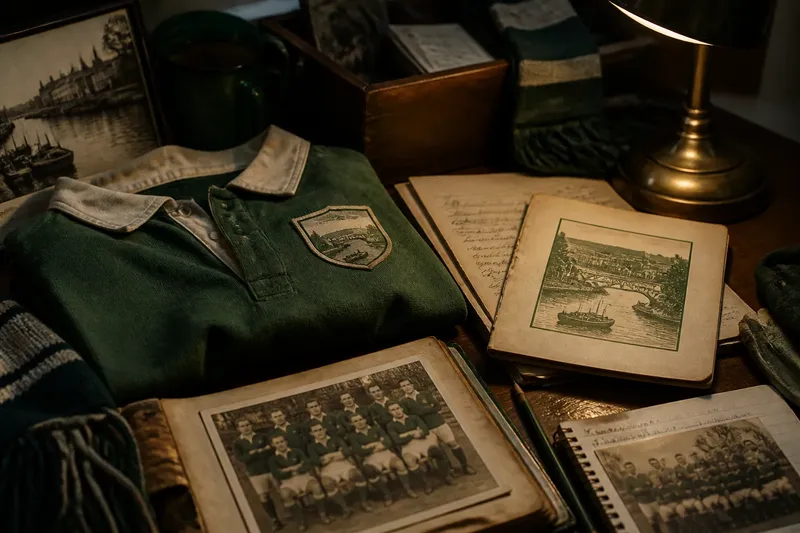
At a Saturday match, a child spots a row of supporters in blue shirts and asks why the team chose that colour. Why teams adopted club colours depends on the club: the choice might have helped distinguish players, reflected an older local association or simply used kit the team could obtain.
Start with the circumstances of the particular club rather than assuming every colour has a symbolic origin. Ask who chose it, when it became familiar and how people use it now.
Did the colours begin as a practical choice?
On a crowded field, a consistent shirt colour helps players, officials and spectators distinguish one side from the other. Early choices could reflect available kit or the need to avoid a clash with an opponent.
A practical beginning does not prevent a colour from gaining meaning. Repeated use can turn a useful distinction into a familiar sign that the club is taking the field.
Look for specific explanations in club histories, archive displays, old programmes or conversations with long-serving members. A record of an early kit or a decision to distinguish the team is stronger evidence than a tidy story repeated without a source. If records leave the origin uncertain, describe the explanation as local memory rather than established fact.
Do the colours connect the club to a place?
A team might use shades already associated with a town, school, workplace, district or earlier sporting organisation. In eastern communities, clubs may draw players and supporters from several nearby settlements, so a colour can become a shared marker without belonging to just one street or neighbourhood.
Do not infer a local connection from appearance alone. Green, red or blue may resemble a landscape or civic emblem, but resemblance does not prove that the club chose its colours for that reason. Look for a club-published explanation or a locally held account, and distinguish a documented choice from an interpretation that developed later.
Say you are examining a fictional riverside club with green shirts. An old programme says the first team bought green jerseys because they were available; newer supporters associate the shade with the riverbank. The evidence supports a practical origin and a later local association, but does not establish that the river inspired the original choice.
Did the colours change as the club developed?
A changed shade, stripe or badge is a clue to examine, not proof that the club has abandoned its identity. Equipment, suppliers, rules or club arrangements can lead to kit changes, while a familiar colour remains. A newer design might also revive an older look to signal continuity.
Compare dated team photographs, match programmes and club records where available. Note whether the main colour, trim, stripe pattern or badge changed; this can help distinguish a shift in identity from a difference in fabric or printing.
Ask who considers the change significant. Committee records may explain a formal decision, while supporters may remember the previous shirt as belonging to a particular ground or generation. The records describe what the club decided; supporters’ accounts describe what the design came to mean to them.
What do supporters’ colours mean in daily life?
Look beyond the playing kit. Supporters might wear club colours to a match, display them at a community gathering or include them in a banner. Repeated use makes the colours recognisable and gives people a simple way to show affiliation, including away from the ground.
Not everyone expresses belonging in the same way. One person might wear the current shirt; another may prefer an old jacket, a plain cap or no club clothing. Recognisable colours are not a test of loyalty or membership.
If club colours appear at a local event, ask whether organisers intended a club reference or chose the palette for another reason. The display might be an official club gesture, supporter-led or coincidental. Avoid assigning a shared meaning to everyone present unless those involved describe it that way.
How should you resolve conflicting accounts?
When accounts differ, compare what each one can establish. A dated photograph or programme can show which colours were used at a particular time; a committee record may explain a formal decision; a supporter’s recollection can describe later associations. Give each source weight for the question it answers, and state plainly when no available evidence settles the original choice.
How can I find a club’s original colours?
Start with the earliest dated club material you can access, such as a programme, photograph or written history. If the record is incomplete, distinguish the first documented colours from the club’s actual first choice.
Why do supporters describe the same colour differently?
People may connect a shade with different periods, places or memories. A supporter’s account can explain what the colour means now without proving why the first team adopted it.
Does a kit change mean the club has abandoned its tradition?
Not necessarily; clubs can alter details while retaining a recognisable core. Check what changed and how the club and its supporters describe the new design before calling it a break.
Can a club have more than one set of colours?
Yes. A club may use different colours for home and away kits, different teams or particular occasions while keeping one set as its best-known identity. Consider how each set is used rather than treating every variation as a separate origin story.
What should you check before explaining a club’s colours?
- Check the date on the earliest photograph or programme you can find; if it shows a consistent kit, identify it as the earliest documented look, otherwise keep the starting date uncertain.
- Check whether a club history names who chose the colours; if it cites a record, report that explanation with its source, otherwise describe the account as unconfirmed.
- Check whether committee minutes or another club record documents a change; if they do, distinguish the formal decision from supporters’ interpretations, otherwise avoid assigning a precise reason.
- Check whether an older shade resembles a local emblem or institution; if a club source connects them, describe the link as documented, otherwise do not present resemblance as evidence.
- Check whether supporters associate the colours with a particular era or place; if people describe that meaning, attribute it to those supporters, otherwise do not assume the association is shared.
- Check whether a banner or event display was organised by the club; if it was, identify it as an official gesture, otherwise describe it as supporter-led or leave the intention open.
How can you explain the colours for your purpose?
If you are choosing a gift or learning a club’s present-day identity, follow the colours the club currently uses and ask a member which version is most recognisable locally. If you are writing about origins, prioritise dated evidence and mark uncertain explanations clearly. If you are talking with supporters, listen for whether they mean the first kit, the current design or memories attached to a particular era.
Why teams adopted club colours often has a layered answer: an early practical choice may have become a visual signature, then acquired local meaning. Keep those stages distinct, and check whether a claim describes the original decision, a later association or the way supporters use the colours today.